Ausnex Construction logoAusnex Construction

Noise reduction · Sydney apartments & homes

Secondary Glazing & Acoustic Windows in Sydney

Too noisy, but replacing your windows isn’t an option? Keep them. We add a second, independent laminated-glass window on the inside to help reduce traffic, train and city noise.

Photos help, but they aren’t required. Just leave your number.

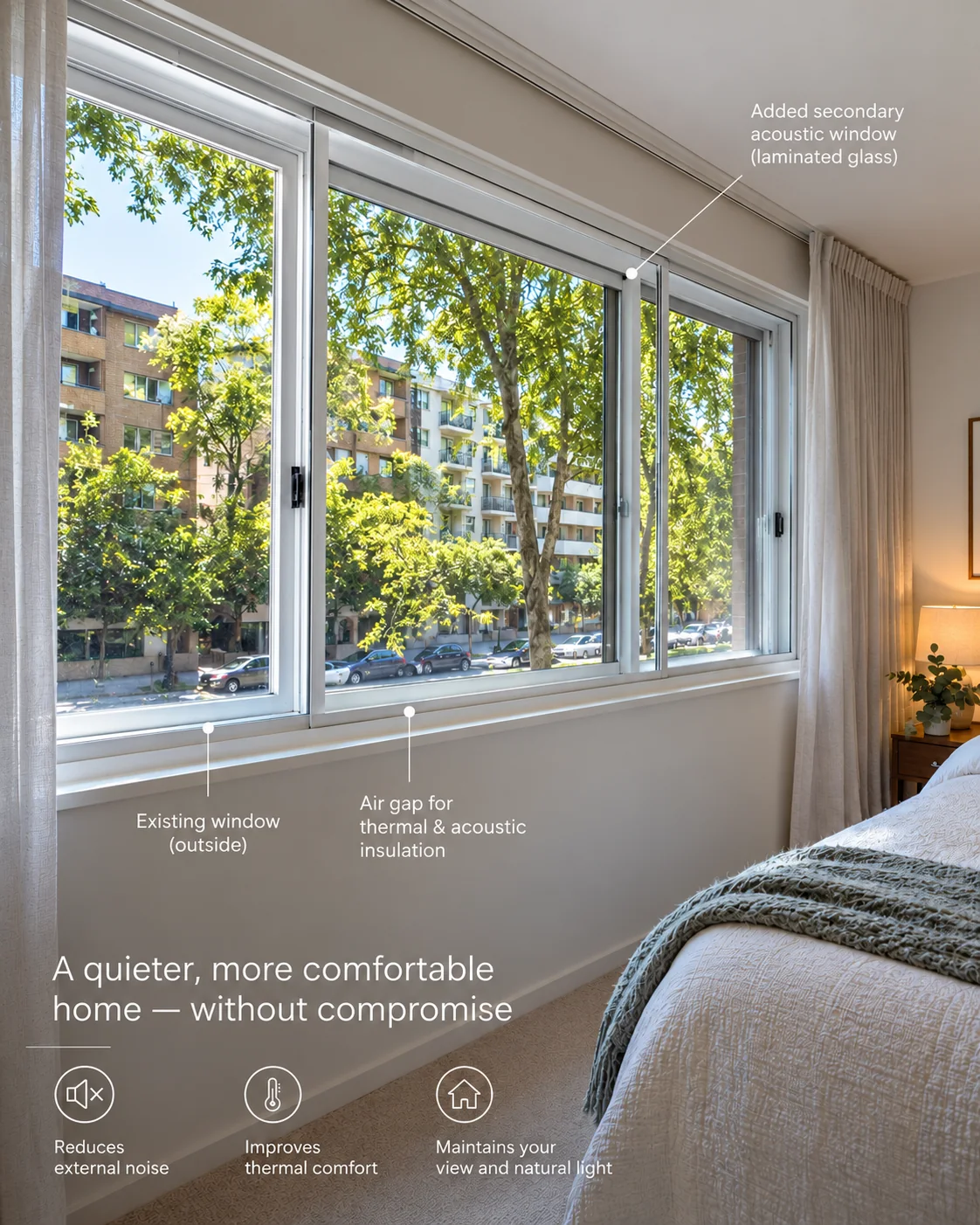
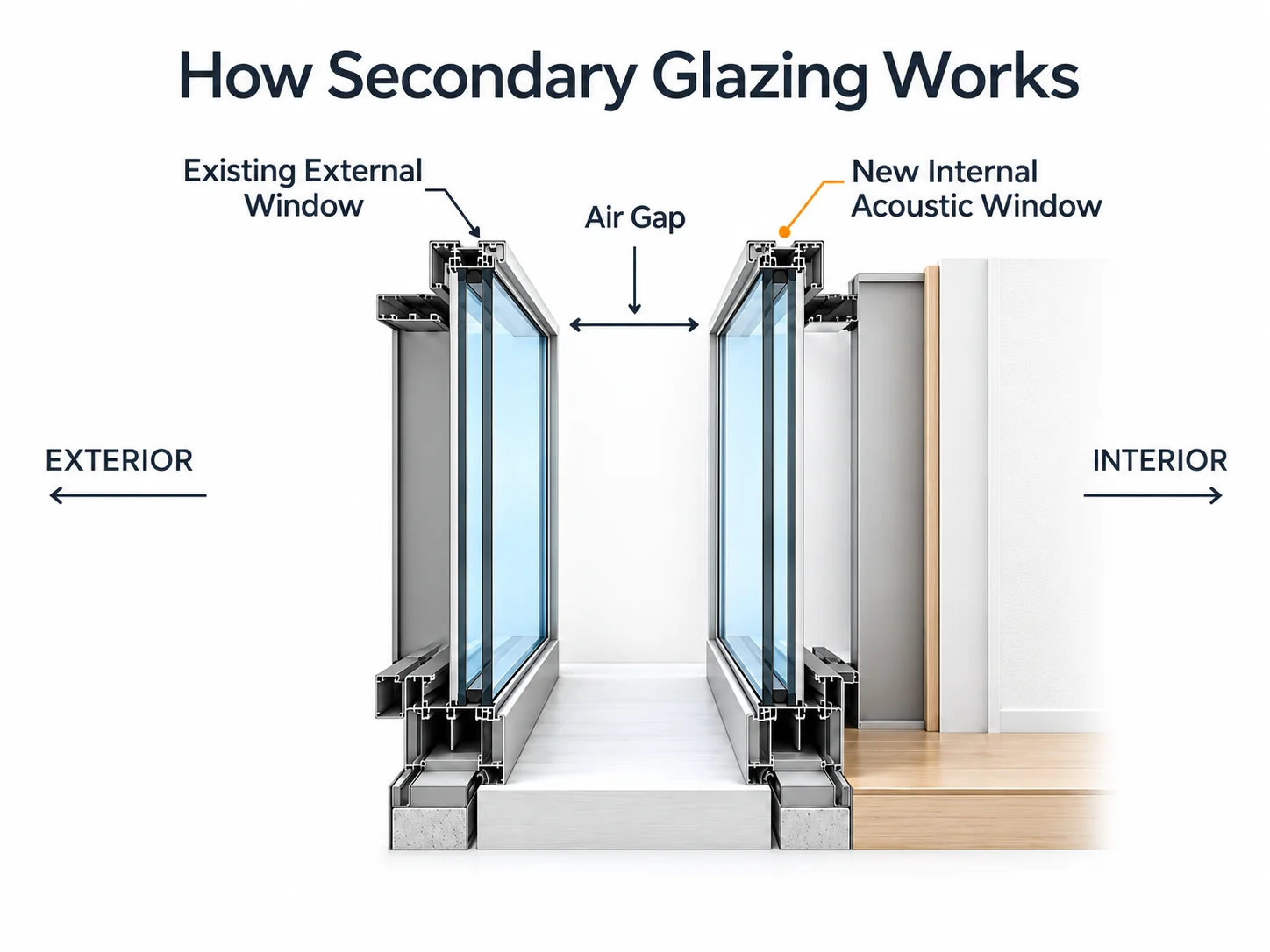
Annotated secondary glazing illustration identifying the existing outside window, new internal laminated-glass window and air gap (opens full-size image in a new tab)
Illustration · existing window, air gap and new internal window. Tap or click to enlarge.
  • Real Sydney jobs

    Beside a highway and near a train station

    See the Parramatta apartment project
  • About half a day on site

    For many straightforward installs

  • Help with strata

    We help prepare the information. Approval rests with your strata.

How it works

What is secondary glazing, and how does it reduce noise?

Secondary glazing keeps your existing window and adds a second, independent window with laminated glass on the inside. Outside noise then has to pass through glass, an air gap and a different glass, losing energy at each step. That’s why it usually does more than simply fitting thicker glass.

Conceptual cross-section showing the existing external window, a separate air gap and the new internal acoustic window (opens full-size image in a new tab)
Illustration · concept cross-section; details vary by property. Tap or click to enlarge.

Existing window

Stays in place.

Air gap

Generally, the bigger the gap, the better.

New internal window

Laminated glass adds mass, and its PVB or acoustic interlayer damps vibration. Commonly 6.38, 8.38 or 10.38mm.

Seals

Gaps around the frame let sound through.

Real projects

Real secondary glazing and acoustic projects in Sydney

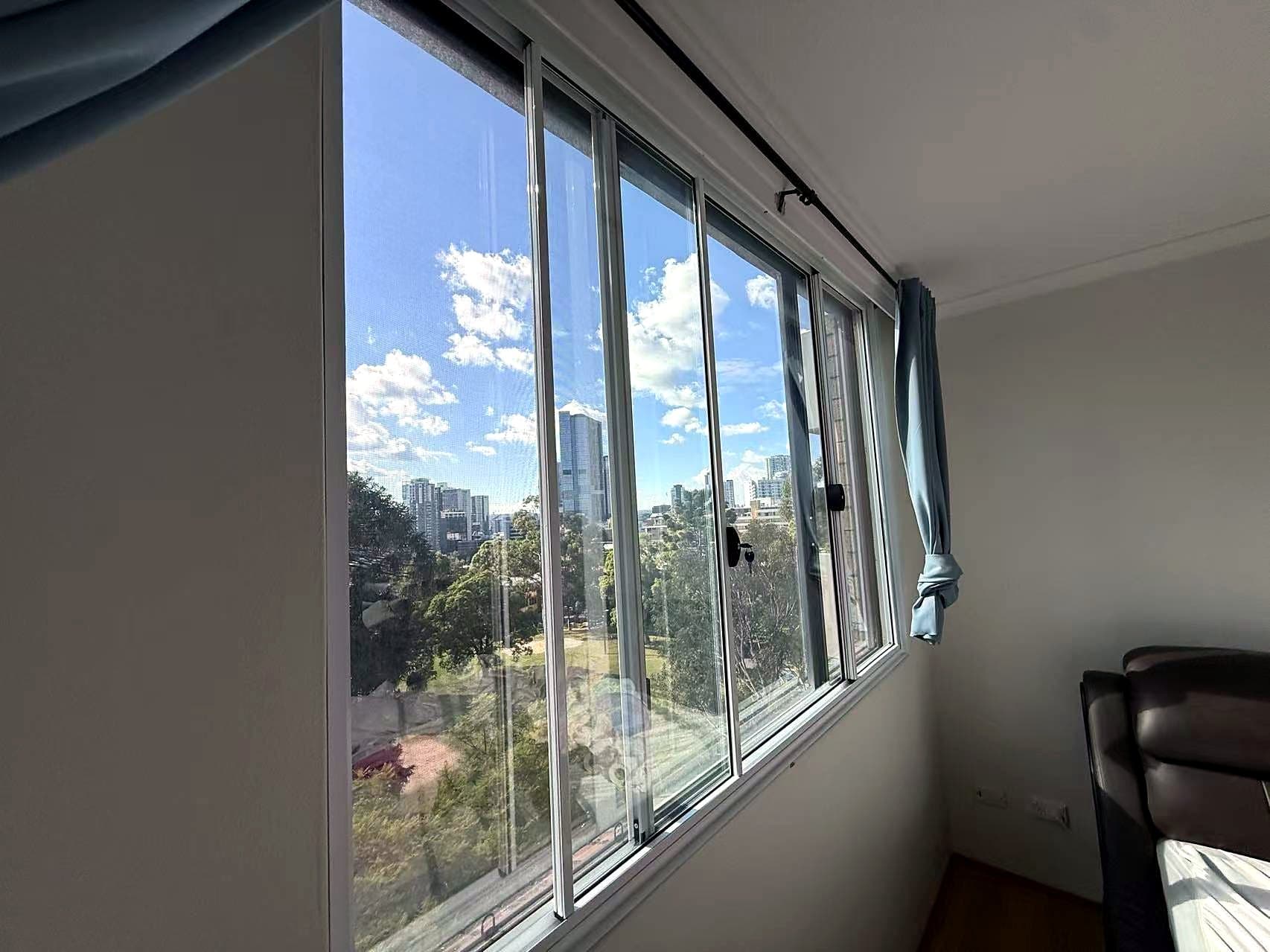
Real internal secondary window installation behind the existing external window in the Parramatta apartmentReal project · Parramatta
Original window kept, new internal window just inside. Many clients can’t tell at first glance that it’s there.
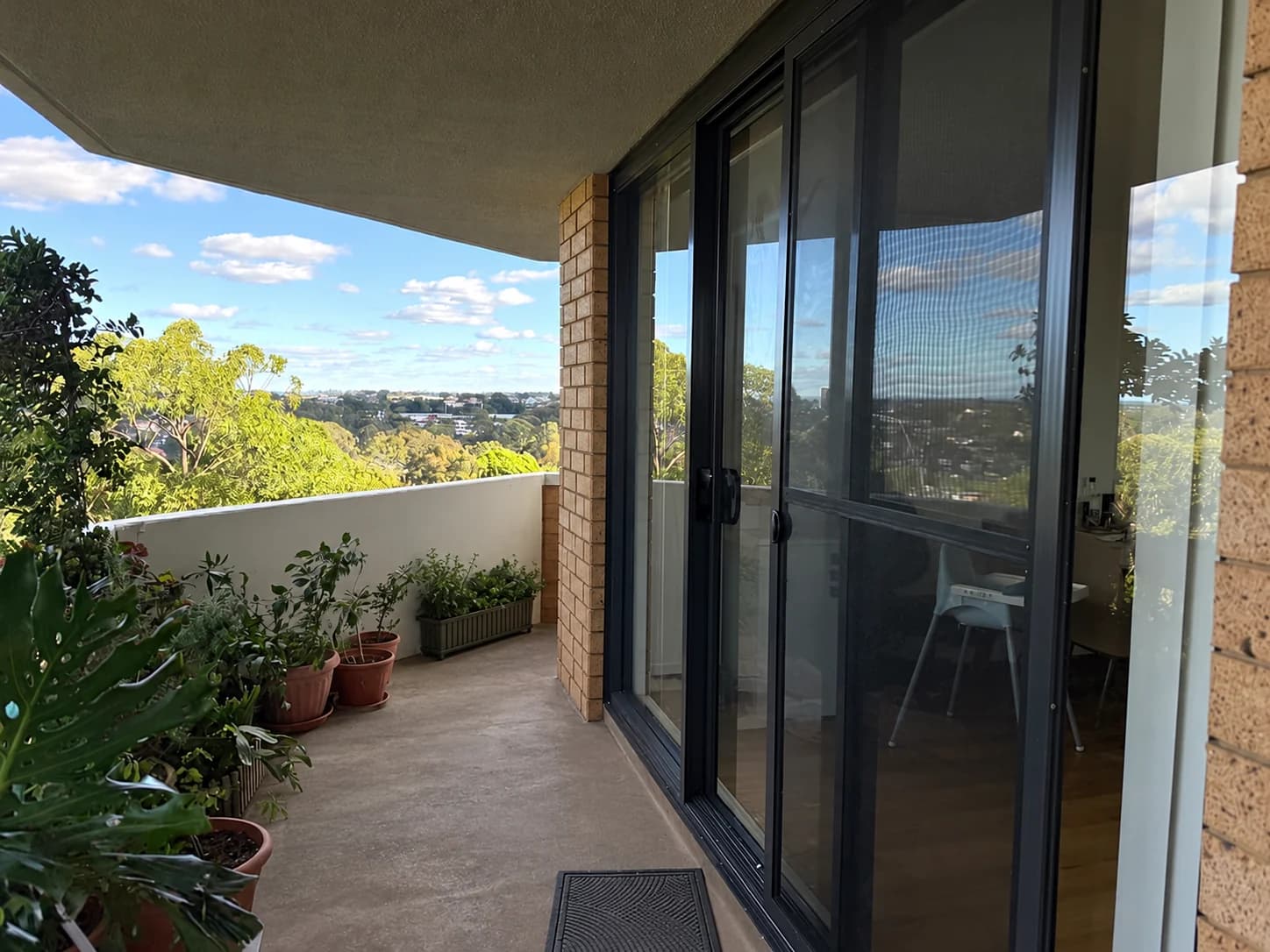
Apartment sliding door and acoustic window upgrade in ParramattaReal project · Parramatta
New balcony sliding doors with laminated acoustic glass.

Parramatta high‑rise near a highway

See the Parramatta apartment project
The noise
A major highway nearby, bedrooms worst at night, and windows and doors over 20 years old.
Strata
Strict about replacing windows and doors. Consent was obtained before we installed, and we helped with the requirements.
What we did
Kept the original windows, added internal laminated-glass windows and replaced the largest balcony sliding doors.
Owner feedback
“The bedrooms are much quieter now, and the highway noise is clearly reduced.”

Strathfield apartment about 10 m from a train station

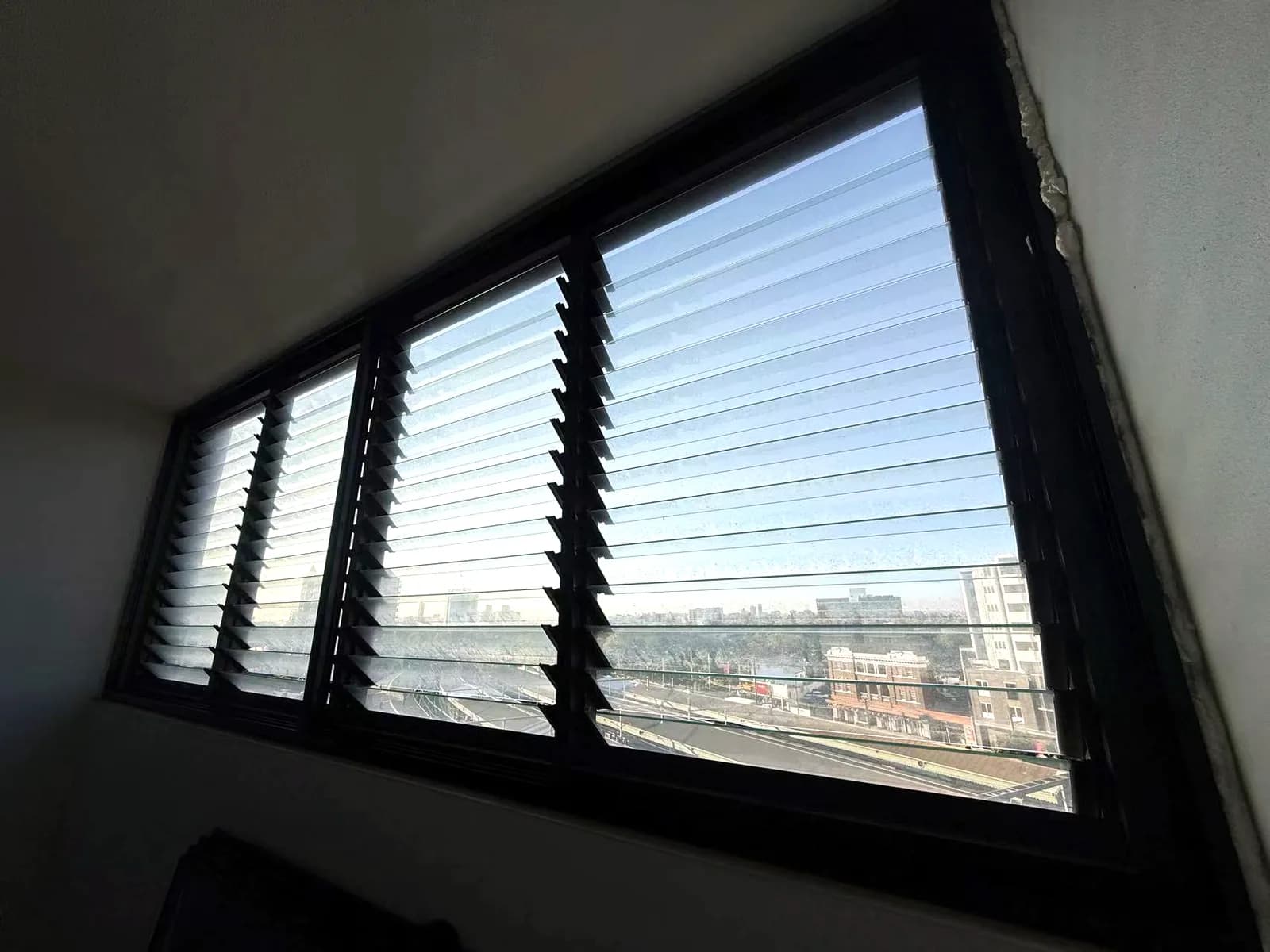
Strathfield apartment window overlooking the railway lines and stationReal project · Strathfield
The noise
Station announcements, voices and passing trains, on a limited budget.
What we did
Added laminated-glass aluminium windows on the balcony and kept the original window.
Result
A noticeable reduction in everyday noise, especially voices and announcements, and less impact from passing trains.

Zetland apartment bedroom

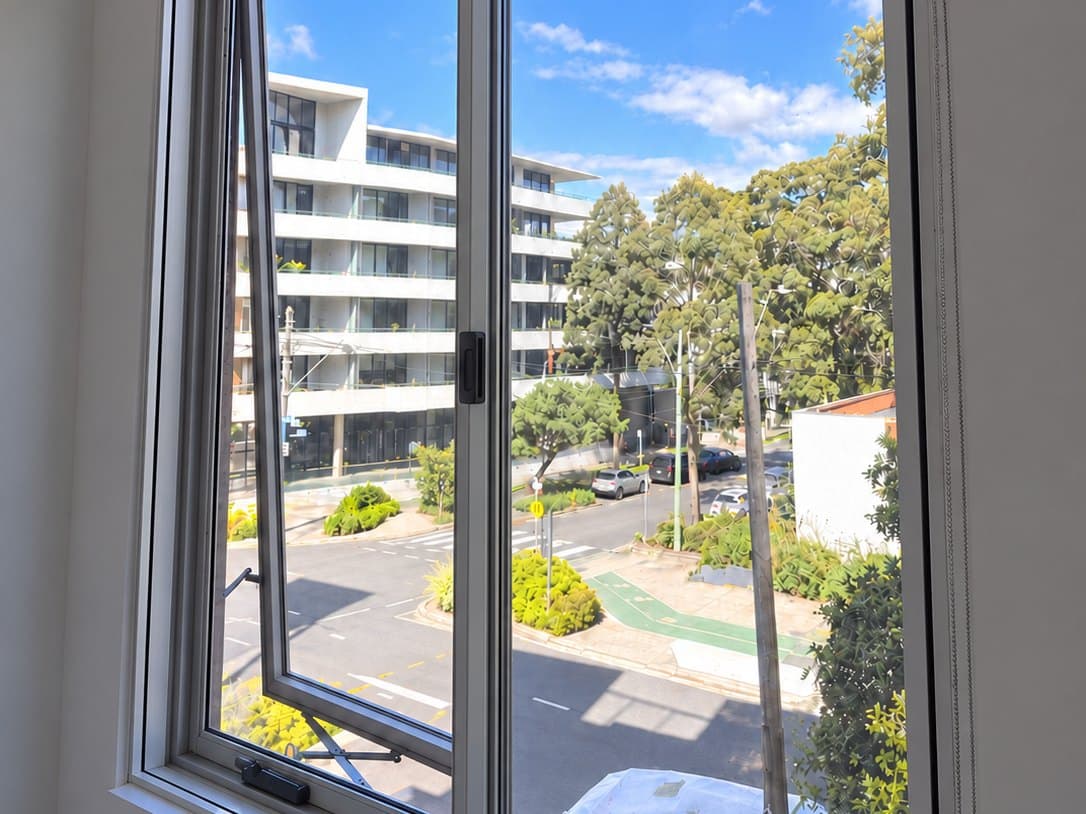
Zetland apartment bedroom with the new internal window, looking out to the streetReal project · Zetland
The noise
Traffic noise from the street outside the bedroom.
What we did
Added an internal laminated-glass window in the bedroom and kept the original window.
Owner feedback
“We used to hear the faint sound of tyres on the road. Now it’s gone, the whole bedroom is quiet and we can finally sleep properly.”

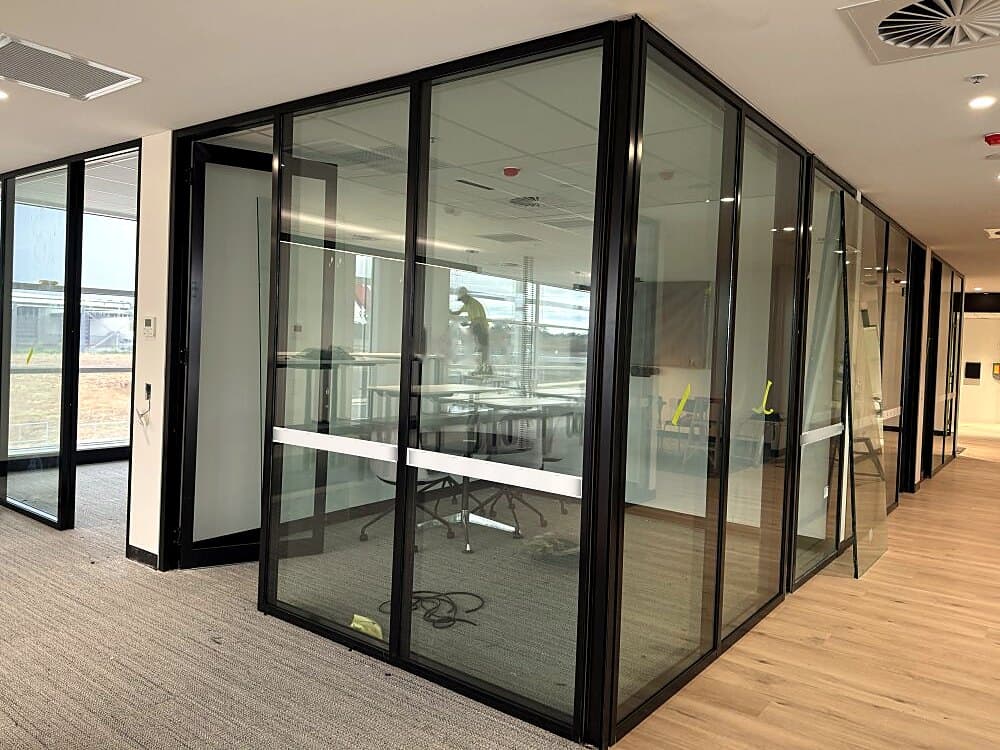
Acoustic partitions for a luxury brand office

Black-framed acoustic glass partitions and doors in an office fit-outReal project · Office
The noise
Voices and everyday noise from office staff.
What we did
Acoustic glass partitions.
Client feedback
“The partitions look beautiful and the sound stays inside. We can talk loudly in there without disturbing anyone outside the glass.”
Send Photos for an Initial Review

Where noise gets in

Traffic, train and city noise: where it gets in

We’re asked about highways, train stations, building sites and playgrounds.

Gaps and thin glass let sound in

Illustration · typical weak points on an older sliding window or door.

  1. Around the window frame
  2. Where the sliding panels meet
  3. Top and bottom tracks
  4. Brush (pile) seals
  5. Door-frame corners
  6. Thin single-pane glass

Ordinary single glass is a weak point too: even with every gap sealed, noise comes straight through a thin pane. Sometimes the main leak is a balcony sliding door. Walls and vents can let noise in too.

Easiest and hardest to reduce

Easier: everyday traffic, voices, barking dogs

Hardest: deep rumble from trucks, buses and aircraft. Some may stay audible.

Your options

Add an internal window, or replace the old one?

An internal window isn’t right for every opening. If there’s no room for a useful air gap, or the real leak is an old balcony sliding door, we’ll tell you.

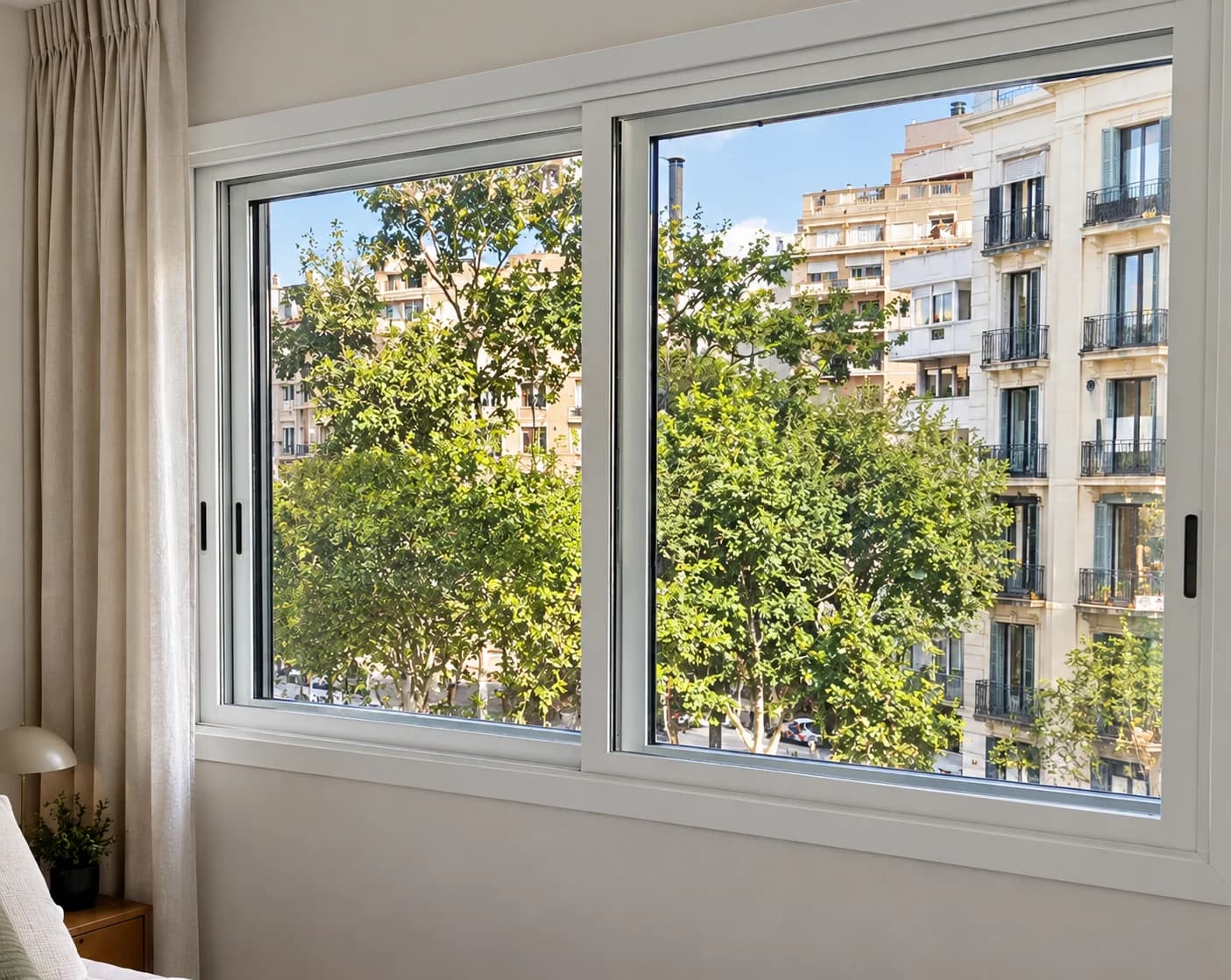
Illustration of a white aluminium internal secondary window in an apartmentIllustration
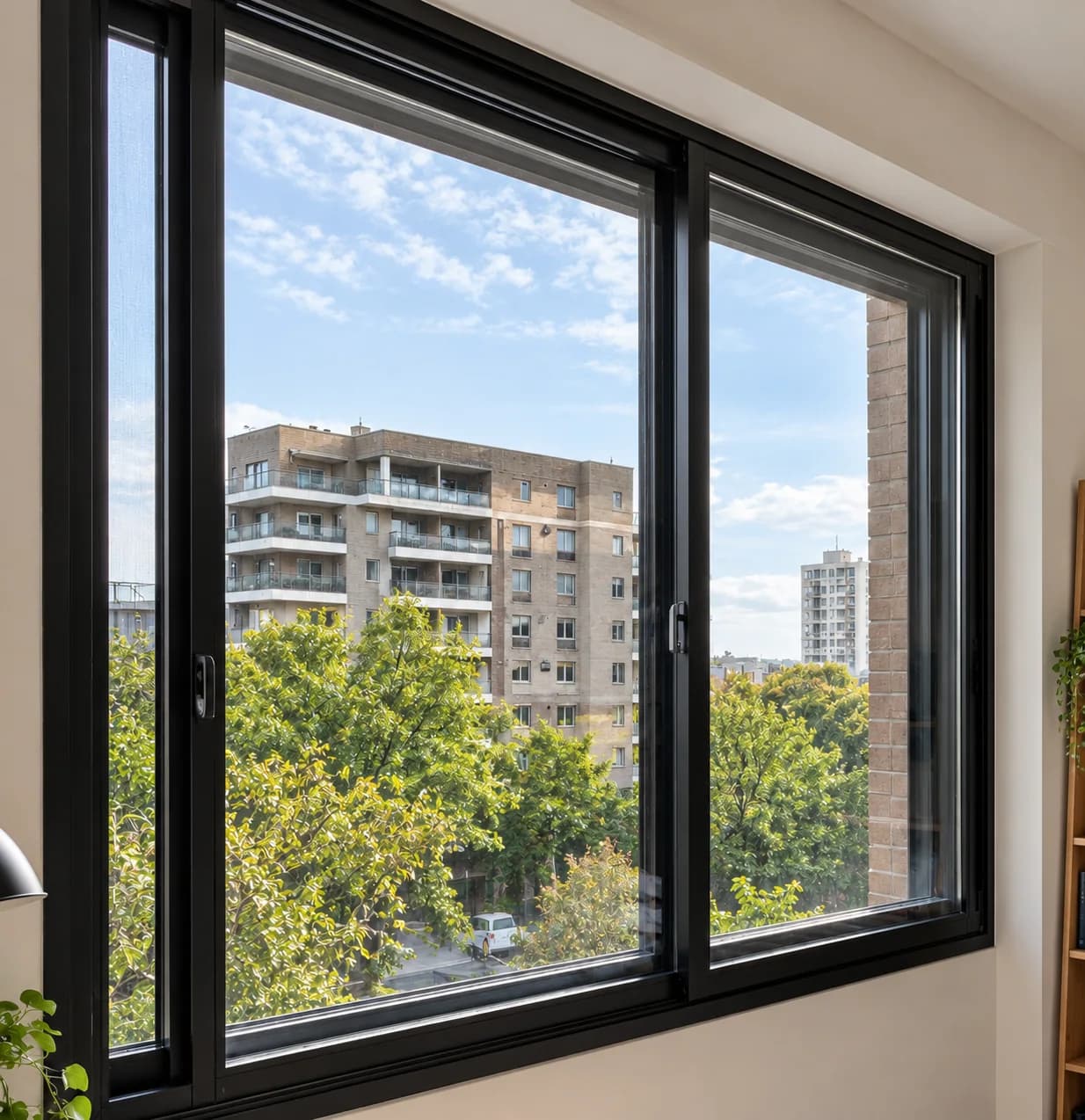
Illustration of a black aluminium secondary window and its internal frameIllustration
Illustrations · white and black aluminium finishes, selected to suit each opening.

Add an internal window

Our first check in apartments

Replace the window or door

From outside

Add an internal window: Usually looks the same

Replace: Facade, colour or frame style can change

On site

Add an internal window: Usually no demolition

Replace: Old window or door removed

Noise

Add an internal window: Usually blocks more: two windows and an air gap

Replace: One window, so it relies on the glass alone

Cost

Add an internal window: Much less

Replace: Usually more, with removal and a new frame

Best when

Add an internal window: The facade can’t change and there’s room for an air gap

Replace: The opening itself, like an old balcony door, is the weak point

In Parramatta we did both: internal windows, plus new balcony sliding doors.

Cost

What affects the cost of secondary glazing?

Three things set the price. We confirm it after the site visit.

  • Window size and number
  • Glass configurationStandard or acoustic laminated, and how thick
  • How hard the install isRecess depth, fixing, floor level and access

Working to a budget? So was our train-station client.

Send Photos for an Initial Review

Strata

Secondary glazing and strata approval

In apartments, the hard part is usually strata, not the glass.

External windows are often part of the facade, so changing them can need approval. An internal window usually leaves the outside unchanged, which can make that conversation easier.

Information we can prepare for your strata

  • Proposed window configuration
  • Approximate dimensions
  • Glazing specification
  • Frame finish
  • Installation description
  • Existing and proposed appearance
  • Whether the external facade is affected

Final approval always rests with your strata (owners corporation).

Need information for your strata?

Send Photos for an Initial Review

How we work

We start with the noise, not the glass

Most people’s first question is how thick the glass should be. Over the past five years, I’ve learnt the better question is where the noise is getting in. So after you send a few photos, I usually come out, listen on site and check your windows and doors. Then we weigh up budget and strata. There’s no magic glass.

Peter · AUSNEX
  1. Send photos, or just your number

    Photos help, if you have them.

  2. We talk it through

    The noise, when it’s worst and your building.

  3. Site visit

    We listen for where the noise gets in, check frames and seals, and measure.

  4. A practical proposal

    Weighing up noise, budget and strata.

  5. Made to measure and installed

    After final measurements and any strata approval.

Your enquiry

Send photos for an initial review

Tell us about the noise and, if you can, add a few photos. Only your name, phone and suburb are required.

1. Your details
2. Photos (optional, but they help most)
  1. The whole window or door, from inside
  2. The side of the window recess, with a tape measure showing its depth (it tells us how much air gap we can fit)
  3. Close-ups where the sliding panels meet, and the tracks
  4. Your balcony sliding door, if you have one

Up to 5 photos.

3. The noise
Noise source (optional)

When is it worst, and in which room (for example, the bedroom at night)? Does it seem to come through a window or the balcony sliding door?

More details (optional)
Preferred contact method

What happens next: we review your details and get back to you to talk it through.

Prefer to message us? Text 0470 224 156

See our privacy notice for how we handle enquiries and optional advertising measurement.

FAQ

Secondary glazing: the questions people ask first

Can’t see your question? Text 0470 224 156

Do I have to remove my existing windows?

Usually not. Secondary glazing keeps your existing window and adds a new, independent window inside. We check on site that the window recess is deep enough for a useful air gap and has a solid fixing point. If it isn’t suitable, we’ll tell you and suggest another option.

Is 6.38mm laminated glass enough?

It depends on the noise and the opening. Laminated glass commonly comes in 6.38, 8.38 or 10.38mm, but thickness is only part of the answer. A glass that differs from your existing pane, say 6.38 or 8.38mm inside a 4mm pane, usually works better than an identical one. The air gap and seals often matter as much.

Is acoustic laminated glass worth it?

It’s worth considering when traffic rumble is the main problem. It costs more than standard laminated, and the difference can be significant. The air gap and seals often matter as much, so we’ll tell you if standard laminated will do.

Is laminated glass or double glazing better for noise?

There is no universal answer. Glass type is only one part of the system. Air gap, frame design, seals, window configuration and the noise itself all influence the final result.

Will I still hear traffic, trucks or planes afterwards?

Possibly some. No window blocks every outside sound. Everyday traffic, voices and barking dogs are usually the easiest to reduce; the deep rumble of trucks, buses and aircraft is the hardest and may stay partly audible. That doesn’t necessarily mean the system isn’t working. We don’t promise a decibel figure, but we’ll tell you on site what’s realistic.

Are “soundproof windows” really soundproof?

No window blocks every sound. When people search for soundproof windows, they usually want a noticeable reduction in traffic, train or neighbourhood noise. For many apartments, secondary glazing with laminated glass, a good air gap and well-sealed frames is the most practical way to get there. We’ll tell you on site what’s realistic.

How long does installation take?

Once your windows are made to measure, many straightforward installs take about half a day on site. Your existing window stays where it is, so there’s no demolition and little disruption. Larger or multi-room jobs take longer, and we confirm timing after the final measure.

Will strata approve secondary glazing?

Every building is different. Because your existing window stays and the outside usually looks the same, an internal window is often easier to discuss with strata, and we can help prepare practical information for them to review. Final approval always rests with your strata (owners corporation).

Does it work for houses too?

Yes. Apartment or house, the approach is the same: keep the existing window and add an independent laminated window inside, with an air gap between them. We check the window recess and the noise source first.
Next step

Bedroom too noisy at night?

Tell us where the noise comes from and send a few photos.